
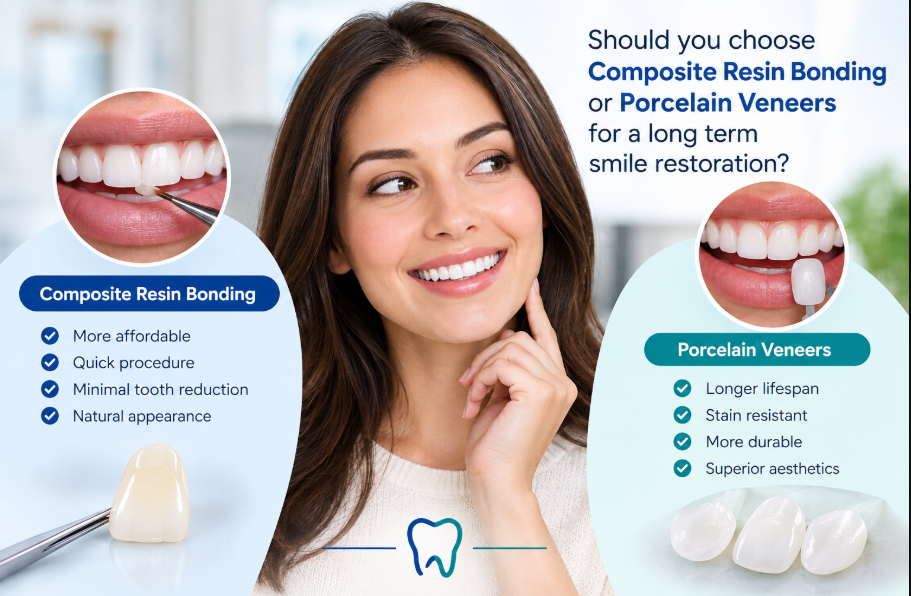
When teeth have chips, discoloration, uneven edges, or small gaps, cosmetic dental treatments may offer ways to change their appearance. Two commonly discussed options are composite resin bonding and porcelain veneers. Although both can improve the appearance of selected teeth, they differ in materials, preparation, maintenance, durability, and cost.
Choosing between them should begin with an assessment of your teeth and oral health. A dental professional can explain which options may be appropriate based on your individual circumstances.
What Is Composite Resin Bonding?
Composite resin bonding uses a tooth-coloured material that is applied directly to the tooth and shaped to achieve the desired appearance. The material is then hardened and polished.
Bonding may be considered for relatively minor cosmetic concerns, such as small chips, slight changes in tooth shape, or limited gaps. One potential benefit is that treatment may require little or no removal of natural tooth structure, depending on the case.
However, composite resin may be more susceptible to staining and wear than porcelain. Its longevity can also depend on factors such as biting habits, oral hygiene, diet, and the location of the restoration.
What Are Porcelain Veneers?
Porcelain veneers are thin custom-made coverings designed to bond to the front surfaces of selected teeth. They may be considered when a patient wants to address concerns involving tooth colour, shape, size, or minor alignment differences.
Veneer treatment generally involves more planning and preparation than direct bonding. Some natural tooth structure may need to be removed to create space for the veneer. Because enamel removal may be permanent, patients should understand the implications before choosing this option.
Porcelain is resistant to staining, although veneers are not immune to damage. They may chip or fracture under excessive force, particularly in people who grind or clench their teeth.
Comparing Durability
For a long-term smile restoration, durability is an important consideration. Both composite bonding and porcelain veneers may require maintenance or eventual replacement.
Porcelain generally has greater resistance to staining and surface wear than composite resin. However, the lifespan of either restoration depends on several factors, including the patient’s oral hygiene, bite, diet, habits, and how well the restoration is maintained.
There is no single material that is appropriate for every patient.
Which Option Fits Your Needs?
The right choice depends on the condition of your teeth and your treatment goals. Bonding may be suitable when the desired changes are relatively small and preserving natural tooth structure is an important consideration.
Veneers may be considered when more extensive cosmetic changes are desired and the teeth meet the requirements for this type of treatment.
A dental assessment should also consider cavities, gum health, enamel condition, existing restorations, tooth sensitivity, and bite problems. Addressing active oral health concerns may be necessary before cosmetic treatment.
Maintenance Matters
Whichever option is selected, daily oral hygiene remains important. Brushing with fluoride toothpaste, cleaning between the teeth, attending regular dental examinations, and following professional care recommendations may help maintain the teeth and restorations.
Patients who grind or clench their teeth may also need to discuss protective options with their dental professional.
Explore Your Teeth Restoration Options With Front St Dental!
A dental professional can examine your teeth, discuss the benefits and limitations of each approach, and help you make an informed decision based on your oral health and personal goals.
If you are considering cosmetic dental treatment, Front St Dental can assess your individual needs and discuss available options. Visit our website learn more or arrange a dental consultation.